When Everyone's Pointing Fingers, Nobody's Shipping
How to rescue a failing vertical when three teams hate each other and customers hate you more
Picture this: 61% of customer complaints land on one vertical. Three teams that barely speak to each other. A #1 NPS detractor that has been haemorrhaging trust for years. Most leaders would call it a turnaround project. I call it Tuesday. Here is the playbook I used to transform a €640M marketplace's fulfilment operation from liability into competitive weapon, and why the same approach works whether you are Series A or IPO-bound.
The problem is not what you think it is
Most product leaders inherit broken things. The metrics are bad. The tech is old. The team is underwater. That is table stakes.
The real problem is nobody believes it can get better.
When I walked into this European marketplace's Fulfilment vertical, the numbers told one story: 61% of CX tickets were fulfilment-related. Shipping had been the #1 NPS detractor for years. Customer Effort Score for shipping: 50% (anything below 70% is failing). Three separate teams, three separate roadmaps, zero shared vision.
But the numbers were not the problem. The problem was what the teams had internalised:
"We just do compliance work."
"We keep the lights on."
"Strategy is for other people."
You cannot fix a vertical that is convinced it exists to be yelled at.
The real diagnosis
Here is what dying verticals have in common: they have lost the plot. Not because people are bad at their jobs. Because when you are drowning, you stop asking why are we in the water?
I spent the first month doing something most turnaround PMs skip: I figured out what game we were actually playing.
The data said: "Shipping is slow, payments are confusing, tracking is broken." The research said something else entirely:
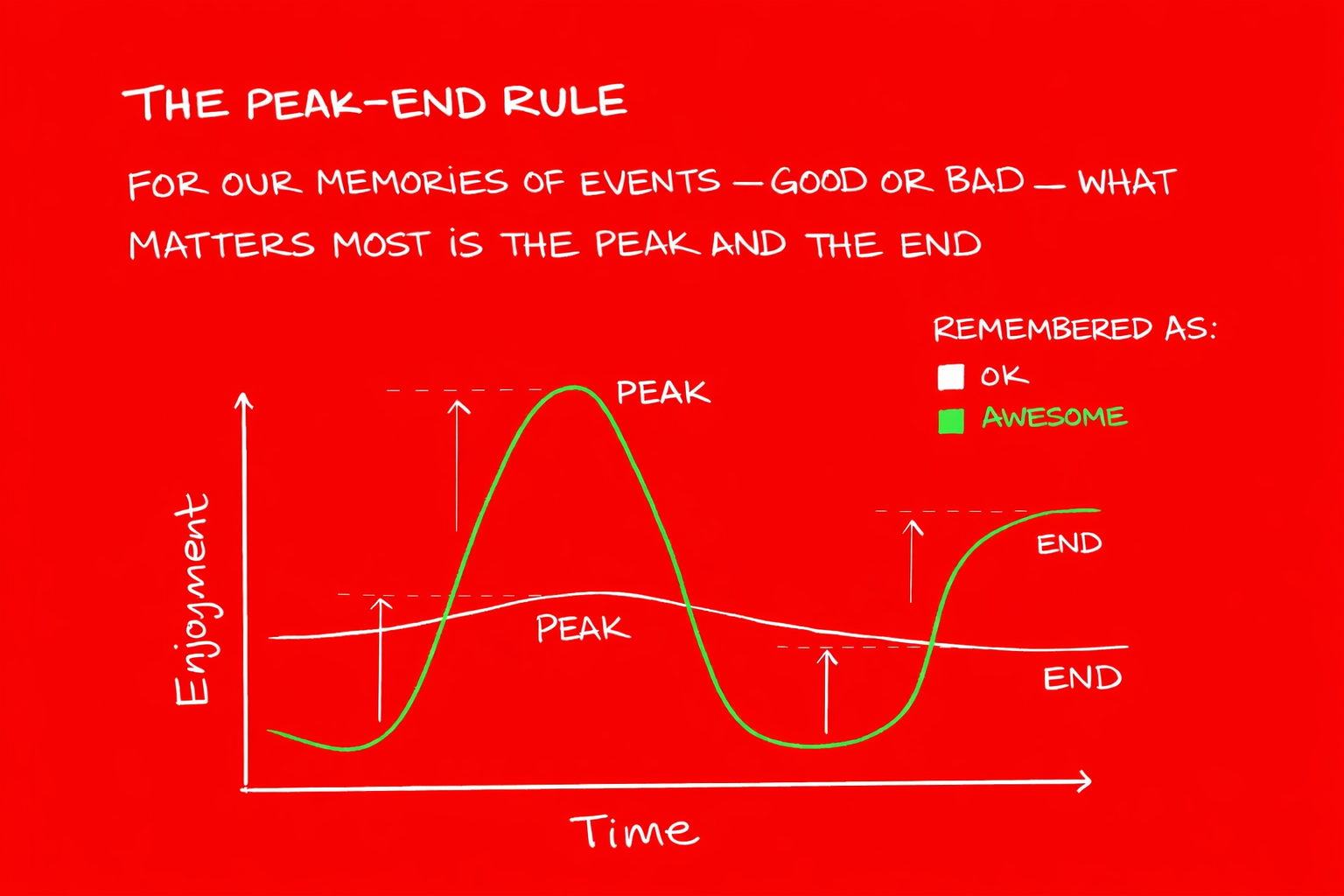
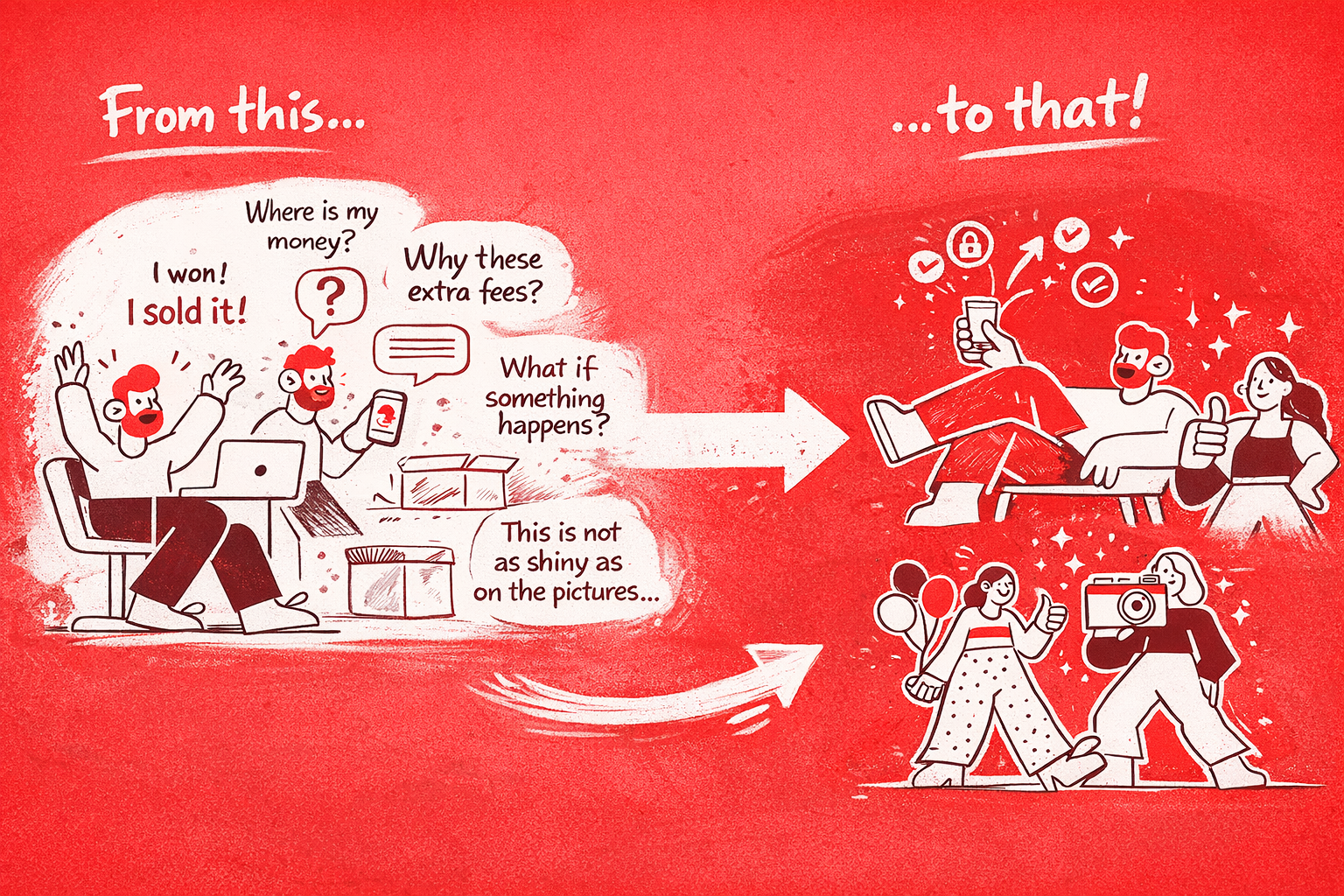
In our case: Peak = "I won the auction!" (Good). End = "Where is my item? Why these extra fees? How long is this taking?" (Catastrophically bad). We were nailing the moment that did not matter and bombing the moment that defined us.
The insight: We did not need to fix shipping. We needed to own the peak-end. That single reframe changed everything.
North Star Metric
Percentage of orders delivered within 14 days of auction end
The framework (or: how to get everyone rowing in the same direction)
You cannot unite teams with a roadmap. Roadmaps are just lists with dates. You unite teams with a shared enemy and a common dream.
The enemy: detractors
"Frankly, at the moment, we create detractors."
From our strategy deck
Nobody wants to be the team customers hate. Once we named it, we could fight it.
The dream: the BHAG
Same-day shipping and instant payout. Getting the object to the buyer, and if needed returning it safely to the seller, before this week is out.
Is this realistic? No. Will we get there? Probably not. Does it clarify what "good" looks like? Absolutely.
Every team needs a North Star that is unreachable but directional. "We shoot for the stars and clear the fence."
The alignment tool: OGSM
Here is the dirty secret about OKRs: they do not work when teams are siloed. I introduced OGSM instead (Objectives, Goals, Strategies, Measures):
Objective
Make the fulfilment journey so delightful and memorable that people come back more often and spread the word.
Goals (2022)
- Speed: 90% orders within 14 days (from 83.6%)
- Ease of Use: 8% cancellations (from 8.9%)
- Peace of Mind: 0.095 CX questions/LiA (from 0.109)
- Retention: New shared metric
Strategies
- Reduce shipping, handling, admin effort for sellers
- Better tracking for buyers and sellers
- Smooth buyer payments
- End journey on a positive note
- Fair and transparent landed costs
Measures
15+ KPIs tied to each strategy, including valid tracking rate, time to pay, CX questions per LiA
Suddenly, Payments, Logistics, and FinTech were not three teams. They were one vertical with a shared scorecard.
The execution (or: how to ship when everything is on fire)
Most case studies gloss over this part. "We executed the plan." Cool story. Here is what really happens when you are trying to transform a vertical: you are doing four impossible things in parallel, and two of them have immovable deadlines.
1. Integrated Shipping Services (ISS)
The flagship bet. Goal: turn the #1 detractor into a competitive advantage. Timeline: beta in March, public rollout June.
2. Landed Cost Transparency
The trust builder. Goal: show buyers total cost (shipping, customs, VAT) upfront. Blocker: requires Tax Determination Service integration.
3. Checkout overhaul and payment methods
The conversion driver. Goal: stop losing 9% of first-time buyers at checkout. Complexity: SEPA takes 2.5 days, cards take 5 seconds. Guess which one dominates Germany?
4. UK/EU VAT compliance
The non-negotiable. Deadline: January 1 (UK), July 1 (EU), or we leak €150K per month.
Oh, and also: migrate three teams off a legacy platform that should have been sunset two years ago.
The crisis moment
March 11, 2022. Two days before ISS beta launch. The money flows requirements for ISS suddenly became clear, and they were way more complex than anyone thought. Confidence level: 1/5 on invoices, 2/5 on payment flows.
We had a choice: delay the beta (lose 3 months of momentum) or rally the entire vertical. We chose rally. Payments, FinTech, and Logistics worked around the clock. By March 18, we were green.
Learning: big launches fail when requirements are discovered late. Small, incremental go-lives with obsessive documentation prevent this. We still shipped the beta on March 14.
The team transformation (the part nobody talks about)
Here is what most leaders miss: culture eats strategy for breakfast, and demoralised teams eat both. When I started, these teams were not just siloed. They had given up.
"We cannot do strategic work, we just keep the lights on." Six months later, they were running tiger teams, crushing VAT pivots in weeks, and stepping across team boundaries without asking permission.
1. We made "one team vertical" real
Not a slogan. A practice. Bi-monthly deep dives replaced annual planning theatre. Rolling 12-month roadmaps updated every 2 months. Shared metrics dashboards everyone could see. Tiger teams for critical work (cross-functional by default). When ISS money flows hit the wall, Payments, FinTech, and Logistics rallied like it was one team's problem. Because it was.
2. We proved quick wins were possible
The UK/EU VAT pivots showed what focus could do: faster shipping (weeks vs months), lower switching costs, more rewarding work. Once they felt it, they wanted more.
3. We made data everyone's job
Built Value Driver Trees linking initiatives to metrics to P&L. No more "build it and hope." Every idea got rapid impact assessment. Teams learned to think in bets.
"We are evolving to a one-team-vertical. Our ways of working are maturing. People and teams are helping each other out. The transition from legacy platform and internal focus to growth mindset and customer focus is going well."
Translation: they stopped being order-takers and became owners.
What did not work (the part that makes this credible)
If I tell you everything went perfectly, you know I am lying. Here is what broke:
1. The 8-month payment provider standoff
Major digital wallet integration blocked for 8 months due to compliance and commercial alignment issues. Impact: €400 to 800K opportunity on hold, Germany expansion delayed. Learning: external dependencies need C-level air cover, not PM persistence.
2. The focus problem
"Importance of Focus remains. We are facing roadmap delays due to too many parallel initiatives." We shipped too much in parallel. Teams burned out. Quality suffered. Solution: hard rule in Q2 2022. Finish before starting.
3. The ISS money flows discovery
Requirements surfaced two weeks before launch. Impact: 3-week roadmap disruption, near-miss on beta delay. Learning: structured requirements discovery beats hoping for the best.
4. The annual planning trap
Q4 planning theatre killed focus and momentum. Solution: ditched annual planning. Moved to continuous 2-month cycles with 12-month outlook.
Most leaders pretend failures did not happen. I think they are the most valuable part.
The numbers (because vibes do not pay salaries)
Fulfilment metrics
- Orders delivered under 14 days: 83.6% to targeting 90%
- Valid tracking: 88% to 92% (targeting 95%)
- CX questions per LiA: 0.109 to 0.099 (targeting 0.095)
- Cancellations: 8.9% to targeting 8%
Checkout and payments
- Paid within 2 days: 77% to 85% (recurring buyers)
- Pay rate: 96% (targeting 97% for new buyers, up from 83%)
Financial impact
- ISS: €310K (NL) plus €600K (market expansion)
- Landed Cost Transparency: €370K
- Checkout optimisation: €730K
- Payment methods: €170K plus €50 to 100K
- Total: €2M+ EBITDA impact from growth initiatives
Compliance
- UK VAT: delivered on deadline, stopped £10 to 20K per month leak
- EU VAT: delivered on deadline, prevented €150K per month leak
- Financial reconciliation: achieved 99.99% matching
Organisational
- OGSM framework adopted across the company (still in use)
- "One team vertical" model became template for other teams
- Peak-End thinking influenced broader product strategy
Why this matters to you
Here is the thing about turnarounds: the tactics change. The principles do not. Whether you are a Series A startup with product-market fit questions or a scale-up with organisational debt, the pattern is the same:
- Diagnose the real problem (hint: it is never just "the metrics are bad")
- Unite around a shared enemy and dream (OGSM is one way, not the only way)
- Prove quick wins to rebuild belief (demoralised teams need momentum)
- Execute in parallel without losing focus (hard rule: finish before starting)
- Transform culture through practice, not slogans (tiger teams beat all-hands speeches)
The specifics were mine: ISS, VAT, Peak-End Rule, OGSM. The approach is yours to adapt.
The real takeaway
Most product leaders optimise what is working. The interesting work is rescuing what is broken when nobody believes it can be fixed. That requires strategic clarity (what game are we playing?), organisational design (how do we move as one?), execution discipline (ship despite chaos), and cultural transformation (belief is a bottleneck).
I did not save this vertical by being smarter than everyone else. I did it by naming the real problem (we create detractors), giving teams a dream (shoot for the stars, clear the fence), building the scaffolding (OGSM, Value Drivers, continuous planning), and getting out of their way (they did the actual work).
The teams went from "we just keep the lights on" to shipping the most strategic work the company had seen in years. Not because I fixed them. Because I helped them remember they were not broken.
Facing a vertical that everyone has given up on?
Three teams that will not talk to each other. Metrics trending the wrong way for years. A roadmap that is mostly compliance and firefighting. Sound familiar?
This is fixable. But not with a new roadmap.
Get in touchRelated: From Insight to Habit (similar team transformation and behavioural design theme)
This case has been lightly anonymised and adapted for publication.